Grease-stained loading bays, algae-slicked walkways, and grime-caked warehouse walls might look bad, but they’re also a safety and compliance risk. That’s why many businesses turn to commercial pressure cleaning. It’s the fast, controlled way to strip years of build-up from large or heavy-use sites without damaging what’s underneath.
If you manage a factory, warehouse, retail strip, or body corporate property on the Gold Coast, here’s what you need to know about industrial pressure cleaning services: what they’re for, how they work, and when they’re the wrong tool for the job.
Quick Answer
- Commercial pressure cleaning is used on large-scale or heavy-duty sites (factories, warehouses, car parks, loading docks, and shopping strips) where grease, oil, and grime build up quickly.
- It uses higher-flow, often hot-water equipment to cut through oil and grease that cold water alone can’t shift.
- A regular washing schedule (usually quarterly to annually) protects surfaces, meets safety obligations, and keeps a site looking professional.
- Not every job needs full-pressure treatment. Soft washing is the safer choice for rendered walls, roofs, and painted surfaces.
- Professional Pressure Wash Co provides commercial pressure washing across the Gold Coast, Brisbane and surrounding areas.
What Sites Need Industrial Pressure Cleaning Services
Not every business needs the same approach to commercial pressure cleaning. Sites that typically call for industrial pressure washing include:
- Warehouses and factories (oil, grease, and dust build up on floors and walls, creating slip and fire hazards)
- Loading docks and car parks (tyre marks, fuel spills, and gum accumulate on high-traffic concrete)
- Shopping centres and retail strips (walkways and entrances need to stay presentable for foot traffic)
- Food service and hospitality sites (grease traps and rear-of-house zones need regular degreasing to meet hygiene standards)
- Body corporate and strata properties (shared driveways and building exteriors need scheduled upkeep)
The common thread is scale and grime type. Sites with oil, grease, or heavy organic build-up generally need stronger, hot-water equipment than a typical driveway clean.
How Commercial Pressure Cleaning Works
Commercial jobs use higher-flow machines than the units suited to home driveways, often paired with hot water to break down oil and grease faster. Hot water pressure washers heat water before it reaches the wand, helping emulsify grease on surfaces such as car parks, drive-throughs, and loading bays. Machines used for larger commercial and industrial jobs commonly run at higher PSI and flow rates than residential units, and surface cleaners are used to clean large, flat areas evenly and quickly.
Water control matters too. Runoff from a commercial site can carry grease, chemicals, or waste, so it can’t always be left to flow into stormwater drains. Depending on the site, crews may contain, divert, or vacuum up wastewater to meet environmental obligations.
Some industrial applications go further still. Ultra-high-pressure water jetting, which can exceed 20,000 PSI, handles specialised tasks such as hydro-demolition and heavy-duty pipe and tank cleaning. This end of the spectrum is tightly regulated in Australia. High-pressure water jetting systems are covered by AS/NZS 4233.1:2013, and SafeWork Australia’s guide for managing risks from high-pressure water jetting sets out the training and safety controls operators must follow.
Building a Commercial Pressure Cleaning Schedule
A one-off clean helps, but a schedule protects your investment. When we plan a wash schedule for a commercial site, we consider:
- Site usage (food areas need more frequent attention than an office car park)
- Surface materials (concrete, render, and Colorbond each respond differently to pressure and heat)
- Local conditions (Gold Coast humidity and salt air speed up mould and algae build-up)
- Any compliance needs, since some sites require documented cleaning records for WHS or council requirements.
Most commercial clients settle on a quarterly to twice-yearly schedule, with high-traffic or food-related areas cleaned more often.
Industrial Pressure Washing vs Power Washing
The terms get used interchangeably, and there’s a lot of overlap. In practice, “power washing” usually means pressure washing with heated water, while “pressure washing” can be hot or cold. For most commercial and industrial pressure-cleaning jobs, heat is the better option. It breaks down grease, oil, and stubborn residue faster than cold water and pressure alone.
When Pressure Washing Isn’t the Right Solution
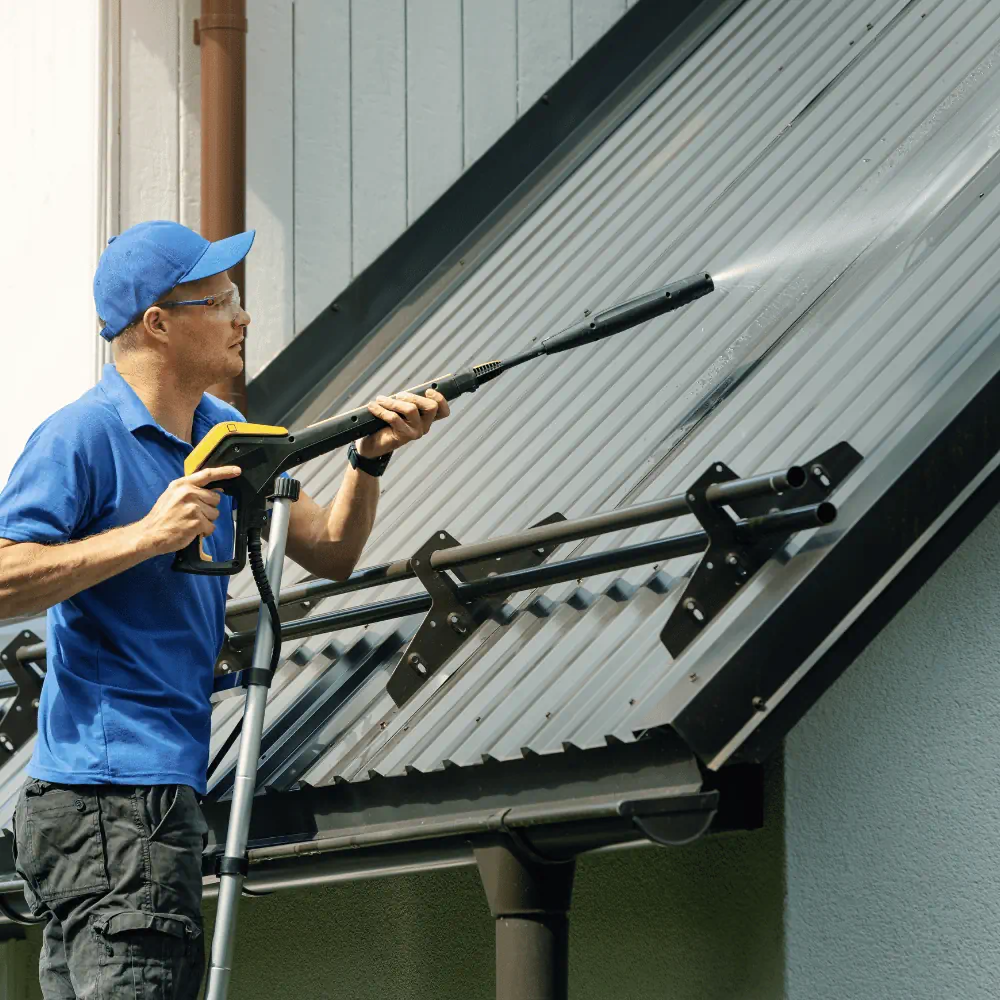
High pressure isn’t always the answer. Painted render, weatherboard, and roof tiles can crack, strip, or scar when subjected to excessive force. For these surfaces, soft wash cleaning and roof pressure cleaning use low pressure and biodegradable solutions to safely lift mould and algae. If you’re a homeowner rather than a business owner, our residential pressure washing service covers exactly this kind of job.
Get Your Commercial Site Looked After
Whether you’re managing a warehouse, a retail strip, or a body corporate property across the Gold Coast, our team at Professional Pressure Wash Co can assess your site and recommend the right commercial pressure cleaning method and schedule
Schedule your pressure wash today and see the difference a properly cleaned site makes.