
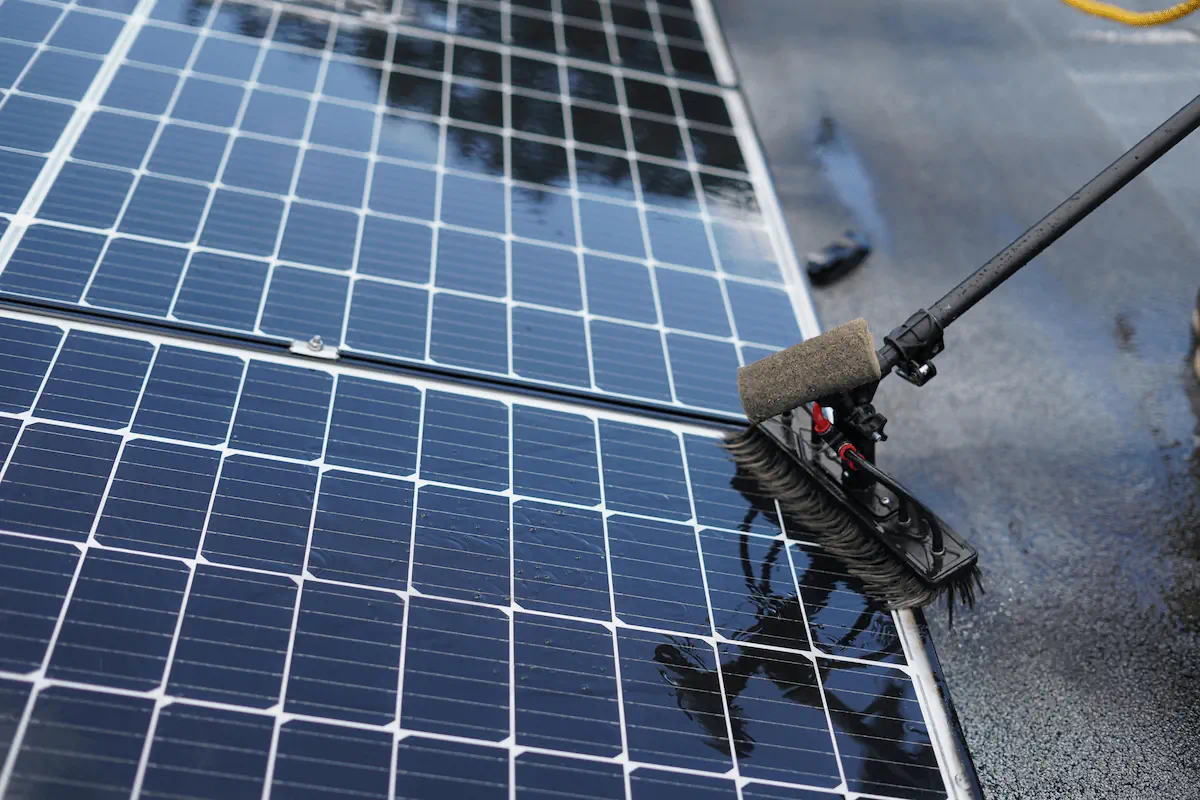
If you’ve got a pressure washer sitting in the garage and a set of solar panels that are looking a bit ordinary after a Queensland summer, you might be thinking it makes sense to give them a quick blast.
However, pressure washing solar panels is not as simple as turning on the washer and spraying them down. Use the wrong water pressure or technique, and you risk cracking junction box seals, fracturing the glass surface or even voiding your warranty and ending up with a giant repair bill.
So, can you clean solar panels with a pressure washer in any circumstances? Here’s what you need to know.
Quick Answer
- You can use water pressure to clean solar panels, but standard pressure washing will damage them.
- High-pressure jets can crack seals, cause micro-fractures in the glass, and void your manufacturer’s warranty.
- The right method is controlled low-pressure rinsing combined with soft brushing and deionised water.
- Dirty panels can lose anywhere from 5–25% of their output, so regular cleaning genuinely matters for your energy savings.
- For Gold Coast homeowners and businesses, professional solar panel cleaning is the safest and most effective option.
Why High-Pressure Washing Damages Solar Panels
Solar panels look tough. Tempered glass, aluminium frames, and built to survive hail. But they’re not built to handle a high-pressure jet fired at close range.
The problem isn’t just the glass. The seals and wiring around the panel are particularly vulnerable, and high-pressure water can breach edge seals, force moisture into electrical components, and create the conditions for corrosion or short circuits.You won’t necessarily see the damage straight away. Micro-fractures and seal breaches often show up later as degraded output or panel failure.
There’s also the warranty angle. Most manufacturers explicitly warn against high-pressure cleaning methods, and using them can be treated as misuse, leaving you personally responsible for repair or replacement costs.
Why Cleaning Solar Panels Is Worth Doing Properly
Dirty panels aren’t just an aesthetic issue. Research has found that energy losses due to soiling on solar panels under conditions similar to those in Australia can reach up to 50% in extreme cases, depending on contamination density.Even in moderate conditions, light pollution alone can reduce output by 5–10%, and the effect compounds as soiling builds up.
On the Gold Coast specifically, panels face a combination of dust, sea salt, pollen and bird droppings, all of which accumulate faster than most owners expect. Coastal salt is particularly stubborn; it forms a film that light rain won’t fully wash away, and it can etch into panel glass over time if left unchecked.
Regular cleaning protects both your output and the system’s long-term health.
Can You Clean Solar Panels With a Pressure Washer at Low Pressure?
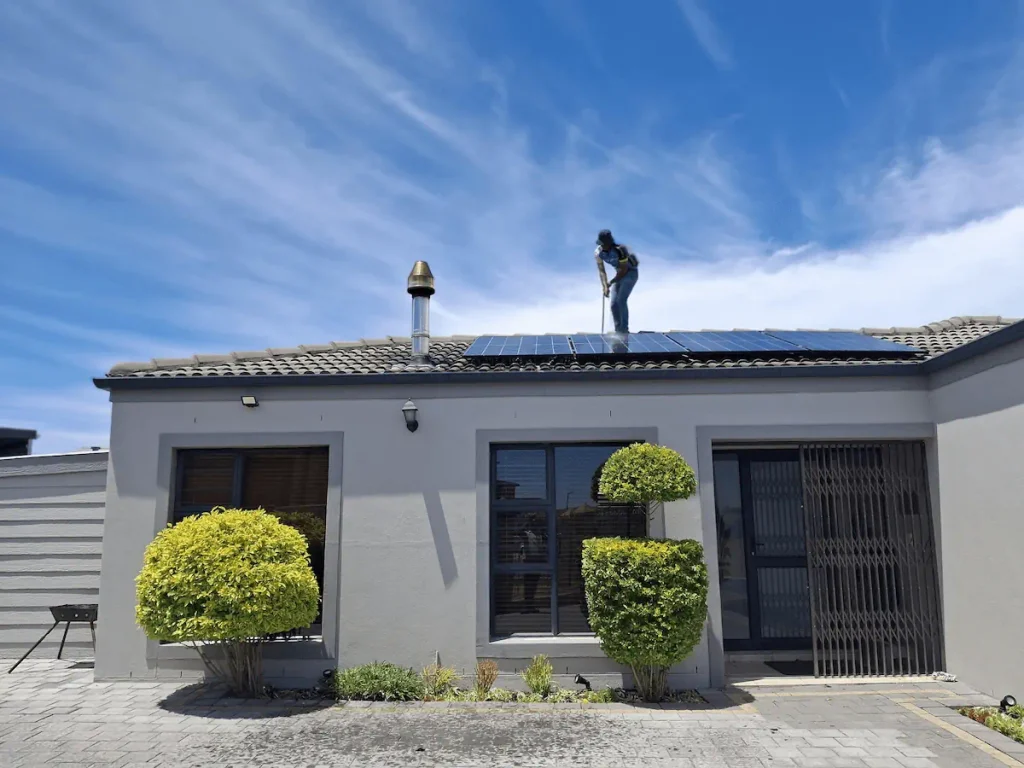
Controlled-pressure rinsing with a wide spray pattern, used at an appropriate distance and within the panel manufacturer’s limits, can be part of an effective cleaning process. What you don’t do is tight-jet, close-distance, high-force blasting.
Even at lower settings, high-pressure washing can damage weatherproof seals, cause water infiltration, and create invisible microcracks in the glass surface.The recommendation from industry sources is to keep pressure well below 40 PSI at the panel surface, which is well below what most consumer pressure washers can achieve.
Temperature matters too. Water should generally not be more than 20°C warmer or colder than the module surface temperature, meaning cold water on hot midday panels is a problem. The thermal shock can cause stress fractures.
The reality is that cleaning solar panels with a pressure washer properly is not a simple DIY job.
Why Professional Solar Panel Cleaning is the Safest Option
When you book an expert solar panel cleaning service, it’s not just pointing a hose at your roof. Specialist cleaners use soft-bristle cleaning equipment, deionised water (which leaves no mineral residue), and techniques calibrated to your specific panels’ capabilities, without touching junction boxes, edge seals, or connectors. Cleans are also timed for early morning when panels are cooler, which matters for both safety and results.
If your roof needs attention too, you can pair solar panel cleaning with a roof soft wash, which is a low-pressure, chemical-assisted treatment that’s safe for tiles and won’t damage panel frames or fixings. For the rest of your property, residential pressure washing and house soft wash services cover driveways, exteriors, gutters and more.
Keep Your Solar Panels Clean and Effective
Can you pressure wash solar panels? With the right low-pressure setup and technique, controlled water pressure can be part of the cleaning process. But standard pressure washing isn’t suitable and carries real risks of seal damage, micro-fractures, and warranty issues.
The smarter call is professional cleaning done properly, so your panels keep doing what you paid for them to do.
Want cleaner panels without the risk? Get in touch with the team at Professional Pressure Wash Co for a free quote. We service homes and businesses across the Gold Coast and are upfront about what your job will cost before we start.